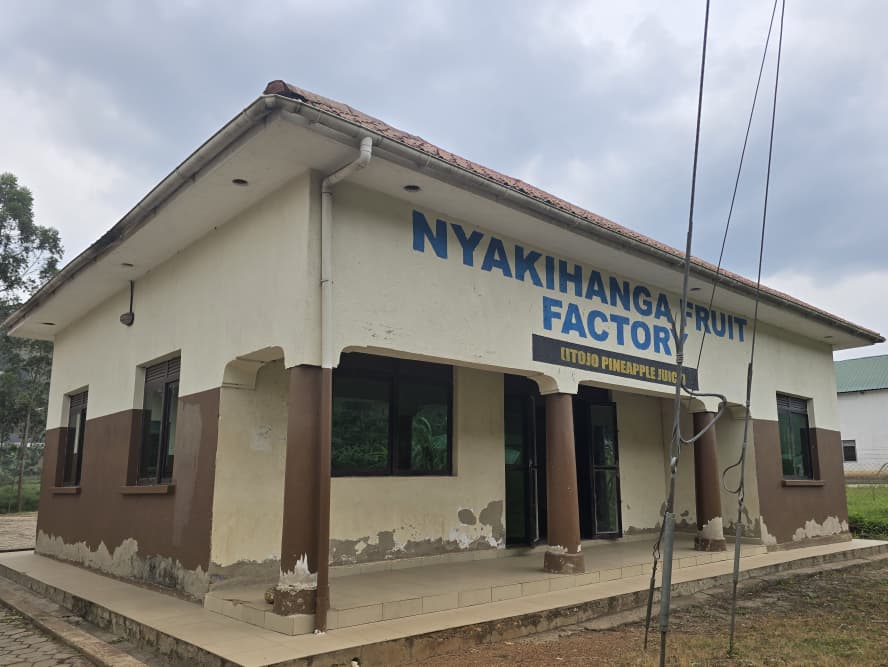
Pineapple farmers in Ntungamo District are facing mounting losses following the closure of the Nyakihanga Fruit Processing Facility in Nyamukana Town Council.
The factory, which produces Itojo Pineapple Juice and was backed by the Uganda Industrial Research Institute, was commissioned in January 2020 with the promise of adding value to locally grown pineapples and providing a stable market for farmers.
Today, the two large buildings along the Ntungamo–Mbarara Road stand silent. Though a branded truck remains parked outside and staff are still on payroll, production lines have not run for years after key machinery reportedly developed faults.
The facility had been established to address unstable markets and fluctuating prices that farmers had endured for years. Local leaders say the community lobbied for the project as early as 2016, seeking government support to boost incomes through value addition.
Hakim Amwiine, the Chairperson of Nyamukana Town Council and a pineapple farmer, says expectations were high.
“This factory was meant to support commercial farmers, add value to each pineapple, and increase household incomes to support education,” Amwiine said.
“We never had a good market around 2016 and requested government intervention with hopes of earning more from our pineapples.”
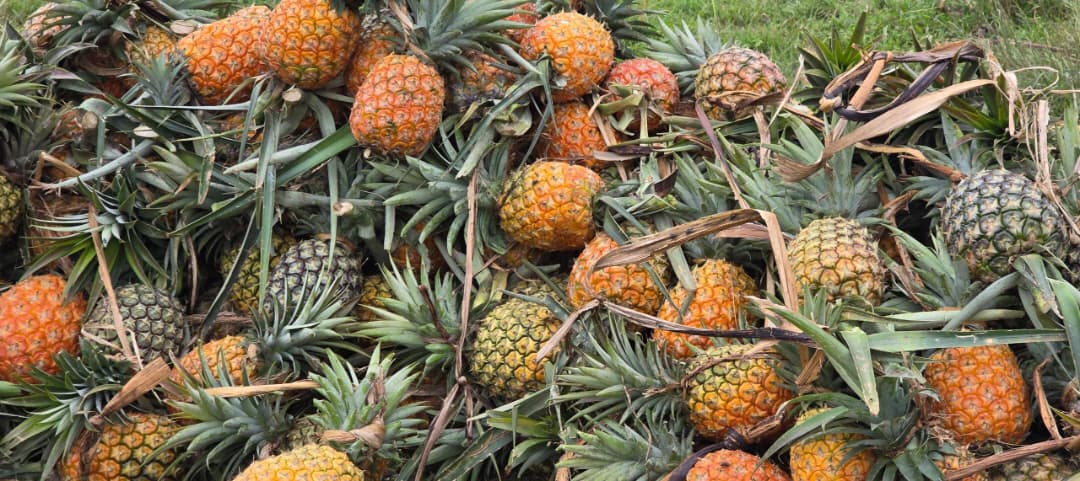
Instead, farmers say they are now selling pineapples at as low as 200 shillings at the farm gate and about 500 shillings in local markets — prices they say barely cover production and transport costs.
More than 2,000 farmers who were encouraged to scale up production to meet the factory’s bulk supply requirements are reportedly struggling to recover their investments.
Ephraim Agaba, a farmer in the area, says many growers took loans to expand acreage in anticipation of a ready market.
“We were told to plant pineapples in plenty, but they never buy them. We took loans and planted more, but since then we have suffered. The price is just 200 shillings yet we have a factory,” he said.
Neema Alibina, another farmer from Nyongozi, says growers are frustrated.
“We invested heavily in inputs, but when we reach the market, we make losses. We plead with the government to work on our factory so that we benefit,” she said.
Some residents add that they even bought shares in the factory, hoping to benefit from its operations, but say the investment has not yielded returns.
Amwiine attributes part of the problem to outdated equipment and packaging challenges.
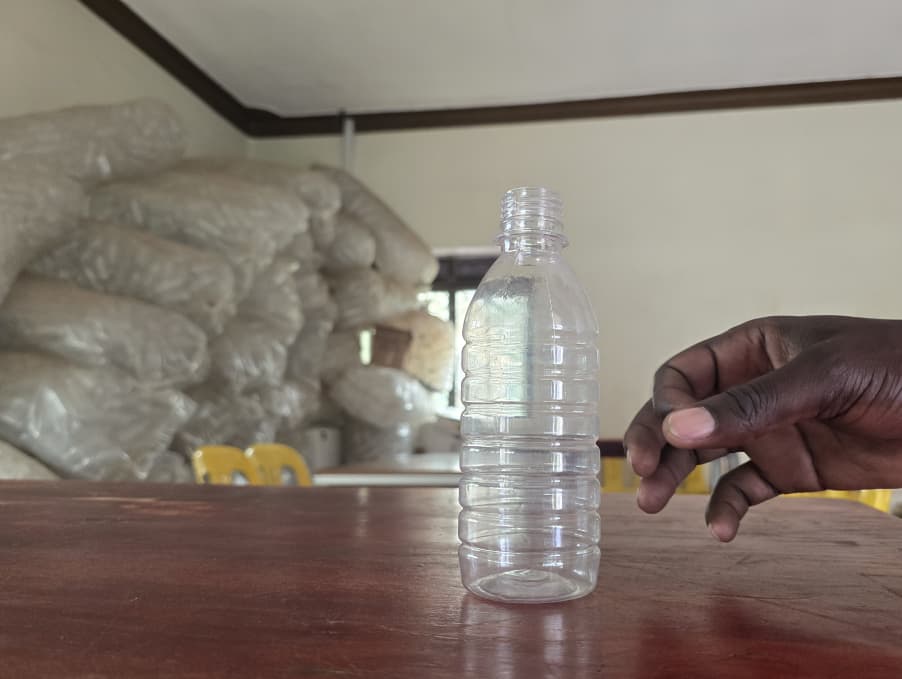
“The machines brought into that building were old models. About 90 percent of the work is manual, and they don’t function well. The bottle design is also a problem — it may not compete favourably with other packaging on the market. We requested a redesign,” he said.
He also questioned the continued expenditure on idle operations.
“Engineers and technical staff are still being paid by the government, but the factory is not working. This project is said to have cost over five billion shillings of taxpayers’ money. We are requesting urgent government intervention,” he added.
Factory management acknowledges the production halt but says efforts are underway to resolve the mechanical issues.
Nathan Mutungi, Chairperson of the factory, confirmed that machinery supplied by UIRI developed faults and that they are awaiting spare parts.
“Our machine got faulty. It was brought to us by UIRI and we asked them to find spare parts, but they have not yet been delivered. We reported the matter to them,” Mutungi said, adding that the factory has been non-operational for months.
Meanwhile, one of the factory buildings has since been occupied by Nyamukana Town Council offices, with reports that leaders share space with unused packaging materials.
Efforts to obtain a comment from the Uganda Industrial Research Institute on the delay in securing spare parts were unsuccessful by press time.
For now, farmers say the silent factory stands as a symbol of unfulfilled promises — and a reminder of the risks smallholder growers face when market assurances collapse.